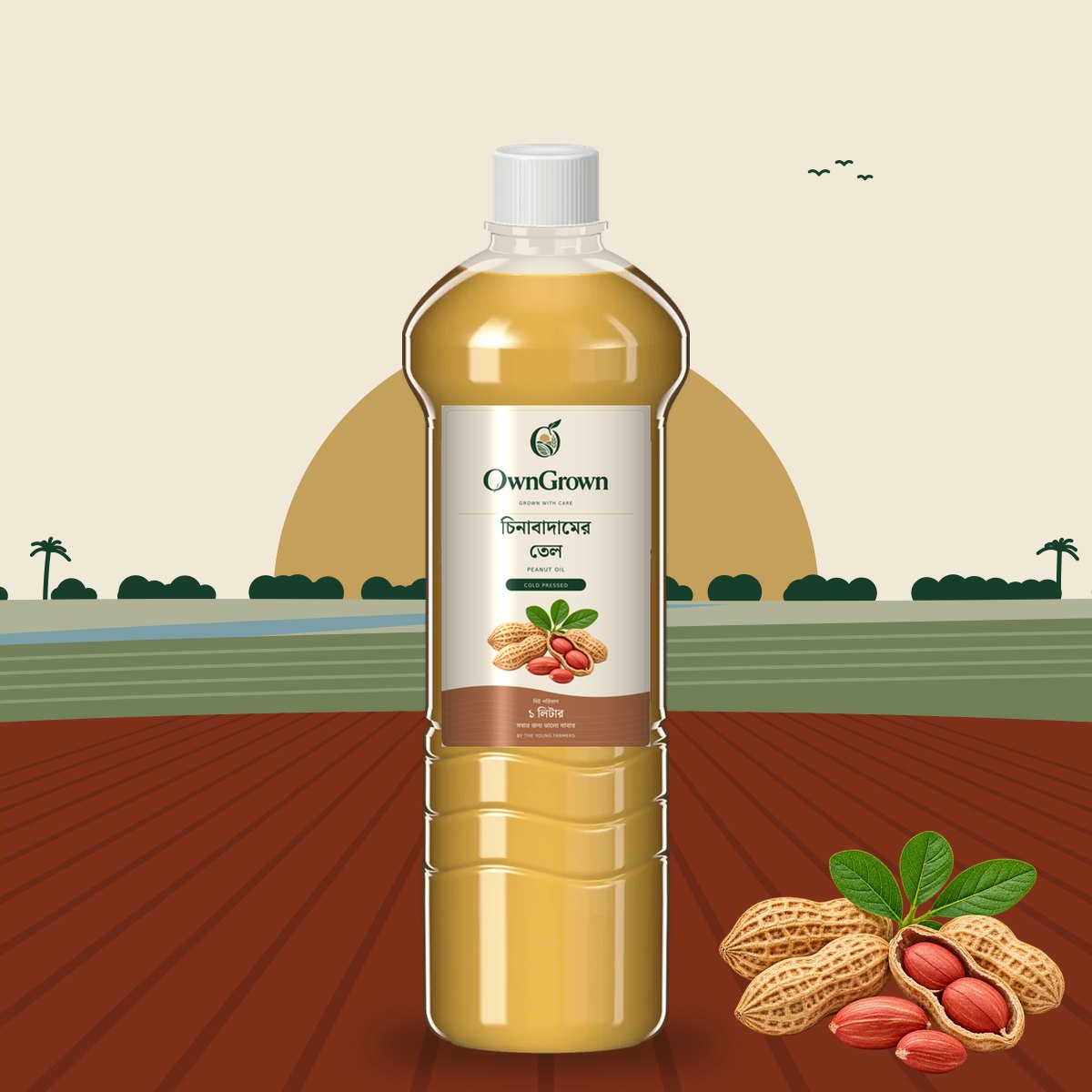
Peanut oil: cooking uses, cautions, and what the research says
How to use peanut oil in cooking, who should avoid it, and what medical research has found about its fats. The Young Farmers, Bhuapur, Tangail.
Akib Jabed Khan2 weeks ago5min

How to use sesame oil in cooking, bhorta and salads, who should avoid it, and what medical research has found. The Young Farmers, Bhuapur, Tangail.
Author
Akib Jabed Khan
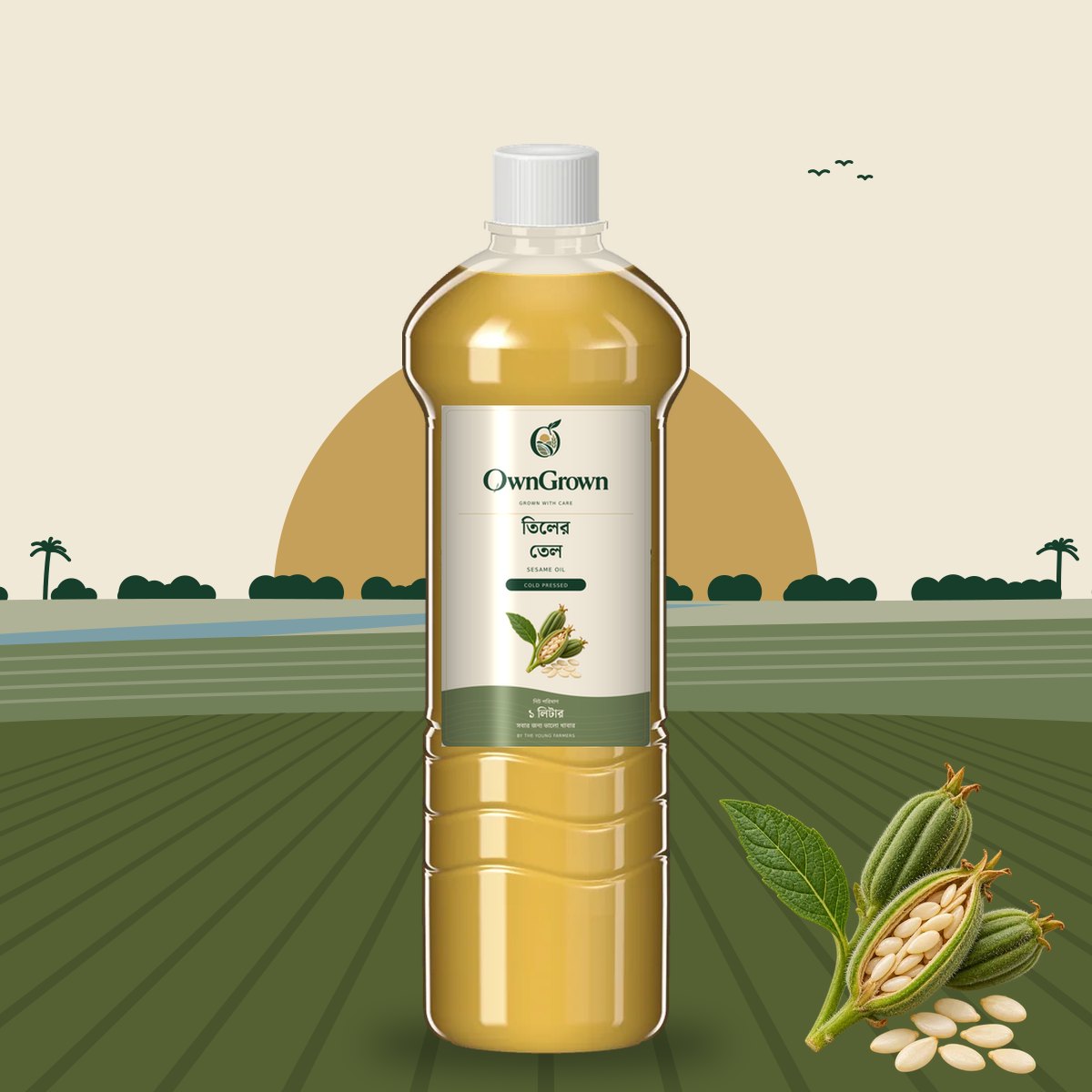
Sesame oil is oil pressed from sesame seeds. Its distinctive aroma adds a different dimension to food. It can be used in cooking, bhorta and salads. Keep it tightly capped in a cool, dark place.
Do not use this oil if you are allergic to sesame.
We grow every OwnGrown crop ourselves. "Ourselves" means The Young Farmers: as an organisation, we work with farmers. We give technical farming advice and other support, and the sesame is grown using scientific methods under our supervision. After harvest, the farmers and we prepare it for sale together. We store the crop with great care, and we eat this oil ourselves too.
It is grown in open fields, following the season, so the colour and aroma of the oil may vary slightly from batch to batch.
No external heat is applied while pressing the oil from the sesame seeds, and the oil is not refined. Our sesame oil has just one ingredient: sesame. The oil is extracted on the first press in a cold-press machine. It is then not refined, only filtered through a centrifuge and a vacuum filter so that no impurities remain. Then it is bottled in Chukainagar, Arjuna, Bhuapur.
Sesame is one of the major causes of food allergy. The US Food and Drug Administration (FDA) lists sesame among the 9 major food allergens [1].
This section is a simple summary of research published in international medical journals, not medical advice. The studies are on sesame and sesame products; no separate study has been done on OwnGrown's oil. Do not use the oil to treat any illness or in place of medicine. If you are on medication, pregnant or breastfeeding, consult a doctor before changing your diet.
What is in sesame oil. According to the USDA, sesame oil is about 40% monounsaturated, 42% polyunsaturated and 14% saturated fat [2].
Trials on sesame. In 2025, Nutrition & Metabolism published an analysis that looked at 13 controlled trials of sesame and sesame products, with 521 participants in total, over 4 to 12 weeks [3]. On average, the groups eating sesame showed lower HbA1c, a long-term blood sugar marker, and lower CRP and IL-6, markers of inflammation. Fasting blood sugar fell slightly, but this did not reach statistical significance. The researchers said sesame may be a promising adjunct for lowering heart-disease risk markers.
Things to keep in mind. The trials were few, with few participants, and short (12 weeks at most). And they covered various sesame products, not just sesame oil.
In short: Most of the fat in sesame oil is unsaturated, and early research on sesame is encouraging, but still small. One tablespoon of oil contains about 120 calories [2], so eat sensible amounts.
Are til oil, til tel and sesame oil the same? Yes. In English it is sesame oil. Many people also search for it by typing "তিল তেল" (til tel).
Can you cook with sesame oil? Yes, on medium heat. To keep the aroma, many people add it once cooking is done.
If I am not allergic to sesame, how much can I have? A sensible amount, as with any other oil. We do not suggest any dose as a medicine.
Our sesame oil comes in 250 ml, 500 ml and 1 litre. Delivery anywhere in the country ৳100, cash on delivery.
View OwnGrown sesame oil · All our cold-pressed oils · Read more: Flaxseed oil: what the research says
About the Author
Akib Jabed Khan
Continue Reading